Blog

Learn more about payments, fintech, and how businesses like yours are growing with Swich. From practical guides to real business stories, everything here is built to help you make better decisions faster.

PCI DSS Compliance in Pakistan: What It Means for Your Business and Why It Matters

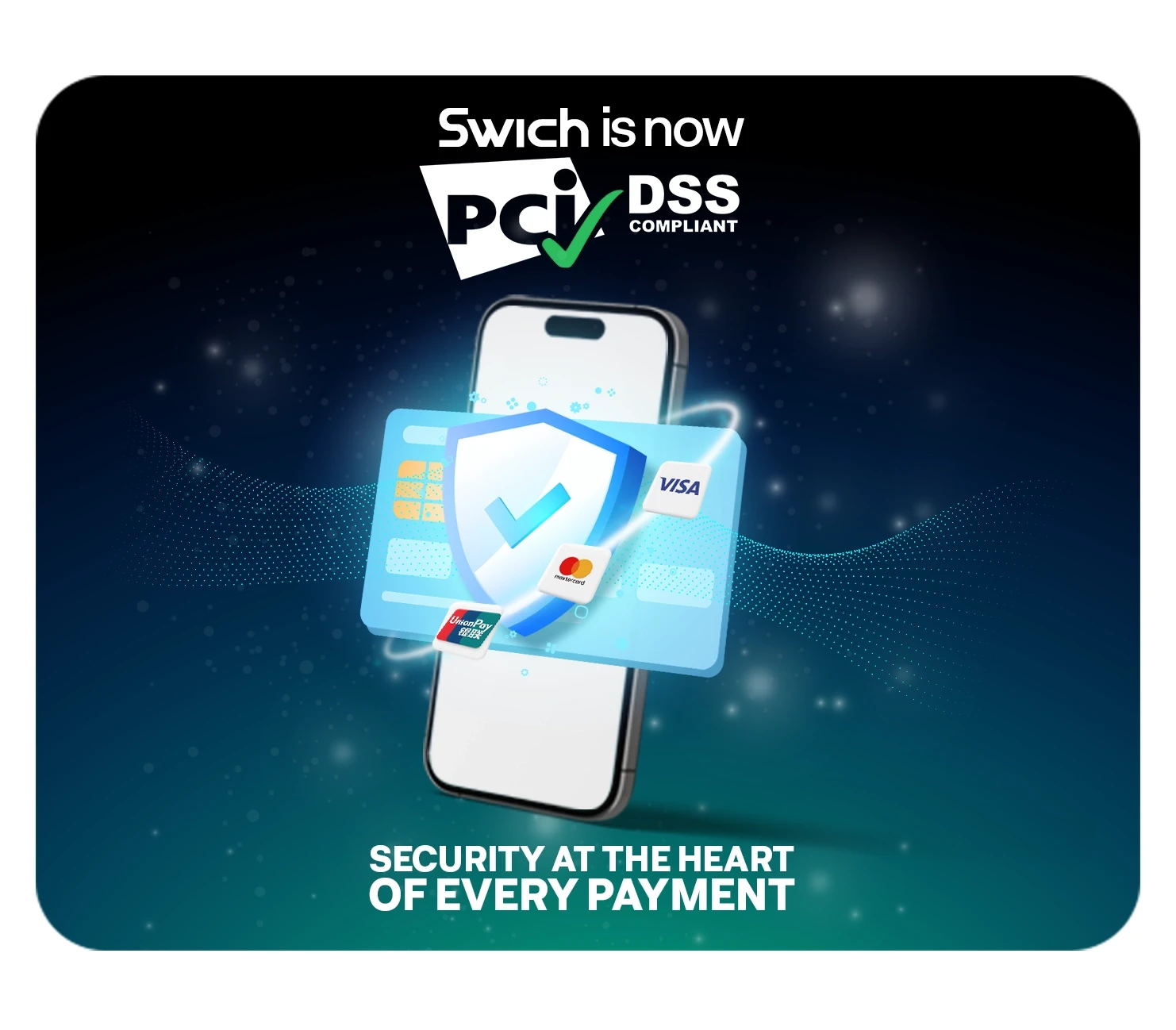
PCI DSS compliance is the global security standard that any business handling card payments must meet to protect customer data and prevent fraud. In Pakistan, where digital transactions now account for 88% of all retail payments, choosing a PCI DSS compliant and secure payment gateway is essential for any business accepting online payments.

What Is PCI DSS?


PCI DSS stands for Payment Card Industry Data Security Standard. It is a set of security requirements created by the major card networks, Visa, Mastercard, American Express, Discover, and JCB, to ensure that any organization processing, storing, or transmitting cardholder data does so in a secure environment.


The standard covers everything from how payment data is encrypted during transmission to how access controls are managed, how networks are monitored, and how vulnerabilities are tested. It exists for one reason: to prevent cardholder data from being stolen, leaked, or misused at any point in the payment process.


The current version, PCI DSS v4.0.1, was published in June 2024 as a limited revision of v4.0. All future-dated requirements became mandatory as of March 31, 2025, meaning every business and payment provider handling card data is now expected to meet the full v4.0.1 standard.

Why PCI DSS Compliance Matters in Pakistan


Pakistan's digital payments landscape has grown rapidly. According to the State Bank of Pakistan's FY25 review, retail payment transactions reached 9.1 billion, a 38% increase year on year. Mobile banking apps processed over 6.2 billion transactions. Raast handled nearly PKR 50 trillion in 2025. Payment cards in circulation crossed 66.7 million.


This growth is significant, but it also means more cardholder data is flowing through more systems than ever before. Every online checkout, every card-on-file subscription, every saved payment method is a data point that needs to be protected. Without proper security standards, this expanding digital ecosystem becomes increasingly vulnerable to breaches, fraud, and data theft.


The SBP has issued specific regulations for payment card security and requires payment system operators and payment service providers to comply with international security standards. PCI DSS is the benchmark. For any business operating a secure payment gateway in Pakistan, compliance is not optional. It is a regulatory and operational necessity.

What PCI DSS v4.0.1 Requires


PCI DSS is structured around 12 core requirements grouped into six categories. Here is what they cover at a high level.


Network security. Install and maintain network security controls. Apply secure configurations to all system components.


Data protection. Protect stored account data. Encrypt cardholder data during transmission across open public networks.


Vulnerability management. Protect systems against malware. Develop and maintain secure systems and software.


Access control. Restrict access to cardholder data on a need-to-know basis. Identify users and authenticate access to system components. Restrict physical access to cardholder data.


Monitoring and testing. Log and monitor all access to system components and cardholder data. Test security of systems and networks regularly.


Security policies. Maintain a policy that addresses information security for all personnel.


PCI DSS v4.0.1 introduced several important updates over previous versions. Multi-factor authentication is now mandatory for all access to cardholder data environments, not just remote access. Automated mechanisms for detecting and responding to security anomalies are required. Stronger encryption standards are enforced. And a new customized validation approach allows organizations to meet security objectives in ways tailored to their specific infrastructure, provided they can demonstrate equivalent protection.

Who Needs to Be PCI DSS Compliant?


Any business that processes, stores, or transmits cardholder data falls under PCI DSS scope. This includes e-commerce businesses accepting card payments on their website, retail stores processing card transactions at POS terminals, subscription services storing card details for recurring billing, marketplaces handling payments between buyers and sellers, and any business using a payment gateway to accept Visa, Mastercard, or other card network payments.


The level of compliance required depends on transaction volume. Businesses are categorized into four levels, with Level 1 (over 6 million transactions annually) requiring a full on-site audit by a Qualified Security Assessor, and smaller merchants using Self-Assessment Questionnaires.


However, here is the important distinction. If a business uses a PCI DSS certified payment gateway, the bulk of the compliance burden shifts to the gateway provider. The merchant does not need to build and maintain its own cardholder data environment because the gateway handles the processing, encryption, and storage. This is one of the most practical reasons to choose a secure payment gateway in Pakistan that is already fully certified.

How Swich Handles PCI DSS Compliance for Your Business


Swich is PCI DSS v4.0.1 certified, assessed by Compliance Wing, a globally recognized PCI Qualified Security Assessor. This means every transaction processed through Swich meets the full requirements of the PCI Data Security Standard as endorsed by all major card brands.


For businesses using Swich as their payment gateway, this certification carries a direct operational benefit. Instead of building and maintaining your own secure cardholder data environment, investing in encryption infrastructure, managing access controls, conducting vulnerability scans, and undergoing annual assessments, you inherit Swich's compliance posture. Your customers' card data never touches your servers. It is processed, encrypted, and secured entirely within Swich's certified environment.


Swich's security infrastructure includes end-to-end encryption on all data transmitted through the platform, multi-layered authentication protocols that verify and authorize every payment, real-time fraud monitoring and anomaly detection, and full compliance with SBP's payment card security regulations.


This means a business can focus on selling, growing, and serving customers while Swich handles the security and compliance layer that makes it all possible.

The Cost of Non-Compliance


The risks of operating without PCI DSS compliance are not theoretical.


A data breach involving cardholder information can result in financial penalties from card networks, ranging from thousands to hundreds of thousands of dollars depending on the severity and volume of compromised data. Beyond fines, a breach can trigger mandatory forensic investigations, increased transaction fees, and in severe cases, the revocation of a merchant's ability to accept card payments entirely.


Then there is the reputational cost. In a market where consumer trust in online payments is still being built transaction by transaction, a single security incident can undo years of brand credibility. Customers who hear that a business has been breached are unlikely to enter their card details on that website again.


For businesses operating in Pakistan's growing e-commerce market, where digital payments are expanding at double-digit rates year on year, the financial and reputational exposure of non-compliance only increases as transaction volumes grow.

How to Choose a PCI DSS Certified Secure Payment Gateway in Pakistan


Not all payment gateways offer the same level of security certification. When evaluating a gateway for online payment compliance, there are several factors to consider.


Certification level and version. Ensure the provider is certified under PCI DSS v4.0.1, the current standard. Older certifications under v3.2.1 are no longer valid for new assessments.


Assessment by a recognized QSA. The certification should be assessed by a Qualified Security Assessor recognized by the PCI Security Standards Council. This ensures the assessment was conducted to the required standard.


Scope of coverage. Understand what the gateway handles versus what remains your responsibility. A fully hosted checkout where card data never touches your servers provides the most significant compliance reduction.


Local regulatory compliance. In Pakistan, the gateway should also comply with SBP's regulations for payment system operators and payment card security. PCI DSS alone is the international standard. Local compliance adds another layer of regulatory alignment.


Multi-channel support. A gateway that handles cards, wallets, bank transfers, and Raast through a single integration, like Swich, simplifies both the operational and compliance picture by consolidating payment processing into one certified environment.

Swich: A PCI DSS v4.0.1 Certified Payment Gateway Built for Pakistan


Swich is a full-stack payments platform offering payment collection, corporate payouts, and cross-border settlement. Its PCI DSS v4.0.1 certification ensures that every transaction, whether a card payment, a wallet transfer, or a bank debit, is processed within a secure, compliant environment.


For businesses looking to accept online payments in Pakistan without building their own security infrastructure, Swich provides the compliance foundation that makes it possible. One integration. Every payment method. Full PCI DSS certification. Full SBP compliance.


Ready to ensure your payments are secure and compliant? Get started with Swich to see how our PCI DSS certified gateway works for your business.

Frequently Asked Questions


What is PCI DSS compliance? PCI DSS is the global security standard for any business that processes, stores, or transmits credit or debit card data. It ensures cardholder information is protected through encryption, access controls, and network security.


Is PCI DSS compliance mandatory in Pakistan? Yes. The SBP requires payment system operators and service providers to comply with international payment card security standards. PCI DSS is the recognized benchmark for any business accepting card payments.


What version of PCI DSS is current? PCI DSS v4.0.1, published in June 2024. All requirements, including previously future-dated ones, became mandatory as of March 31, 2025.


How does using Swich help with PCI DSS compliance? Swich is PCI DSS v4.0.1 certified, meaning cardholder data is processed entirely within Swich's secure environment. Businesses using Swich do not need to build or maintain their own cardholder data infrastructure, significantly reducing their compliance scope.


What happens if my business is not PCI DSS compliant? Non-compliance can result in financial penalties from card networks, mandatory forensic investigations, increased transaction fees, and potential loss of the ability to accept card payments. A data breach also carries significant reputational damage.


Can small businesses in Pakistan achieve PCI DSS compliance? Yes. Small businesses with lower transaction volumes can use Self-Assessment Questionnaires rather than full on-site audits. Using a PCI DSS certified gateway like Swich further simplifies compliance by handling the most sensitive aspects of card data security.
PCI DSS Compliance in Pakistan: What It Means for Your Business and Why It Matters

PCI DSS compliance is the global security standard that any business handling card payments must meet to protect customer data and prevent fraud. In Pakistan, where digital transactions now account for 88% of all retail payments, choosing a PCI DSS compliant and secure payment gateway is essential for any business accepting online payments.

What Is PCI DSS?


PCI DSS stands for Payment Card Industry Data Security Standard. It is a set of security requirements created by the major card networks, Visa, Mastercard, American Express, Discover, and JCB, to ensure that any organization processing, storing, or transmitting cardholder data does so in a secure environment.


The standard covers everything from how payment data is encrypted during transmission to how access controls are managed, how networks are monitored, and how vulnerabilities are tested. It exists for one reason: to prevent cardholder data from being stolen, leaked, or misused at any point in the payment process.


The current version, PCI DSS v4.0.1, was published in June 2024 as a limited revision of v4.0. All future-dated requirements became mandatory as of March 31, 2025, meaning every business and payment provider handling card data is now expected to meet the full v4.0.1 standard.

Why PCI DSS Compliance Matters in Pakistan


Pakistan's digital payments landscape has grown rapidly. According to the State Bank of Pakistan's FY25 review, retail payment transactions reached 9.1 billion, a 38% increase year on year. Mobile banking apps processed over 6.2 billion transactions. Raast handled nearly PKR 50 trillion in 2025. Payment cards in circulation crossed 66.7 million.


This growth is significant, but it also means more cardholder data is flowing through more systems than ever before. Every online checkout, every card-on-file subscription, every saved payment method is a data point that needs to be protected. Without proper security standards, this expanding digital ecosystem becomes increasingly vulnerable to breaches, fraud, and data theft.


The SBP has issued specific regulations for payment card security and requires payment system operators and payment service providers to comply with international security standards. PCI DSS is the benchmark. For any business operating a secure payment gateway in Pakistan, compliance is not optional. It is a regulatory and operational necessity.

What PCI DSS v4.0.1 Requires


PCI DSS is structured around 12 core requirements grouped into six categories. Here is what they cover at a high level.


Network security. Install and maintain network security controls. Apply secure configurations to all system components.


Data protection. Protect stored account data. Encrypt cardholder data during transmission across open public networks.


Vulnerability management. Protect systems against malware. Develop and maintain secure systems and software.


Access control. Restrict access to cardholder data on a need-to-know basis. Identify users and authenticate access to system components. Restrict physical access to cardholder data.


Monitoring and testing. Log and monitor all access to system components and cardholder data. Test security of systems and networks regularly.


Security policies. Maintain a policy that addresses information security for all personnel.


PCI DSS v4.0.1 introduced several important updates over previous versions. Multi-factor authentication is now mandatory for all access to cardholder data environments, not just remote access. Automated mechanisms for detecting and responding to security anomalies are required. Stronger encryption standards are enforced. And a new customized validation approach allows organizations to meet security objectives in ways tailored to their specific infrastructure, provided they can demonstrate equivalent protection.

Who Needs to Be PCI DSS Compliant?


Any business that processes, stores, or transmits cardholder data falls under PCI DSS scope. This includes e-commerce businesses accepting card payments on their website, retail stores processing card transactions at POS terminals, subscription services storing card details for recurring billing, marketplaces handling payments between buyers and sellers, and any business using a payment gateway to accept Visa, Mastercard, or other card network payments.


The level of compliance required depends on transaction volume. Businesses are categorized into four levels, with Level 1 (over 6 million transactions annually) requiring a full on-site audit by a Qualified Security Assessor, and smaller merchants using Self-Assessment Questionnaires.


However, here is the important distinction. If a business uses a PCI DSS certified payment gateway, the bulk of the compliance burden shifts to the gateway provider. The merchant does not need to build and maintain its own cardholder data environment because the gateway handles the processing, encryption, and storage. This is one of the most practical reasons to choose a secure payment gateway in Pakistan that is already fully certified.

How Swich Handles PCI DSS Compliance for Your Business


Swich is PCI DSS v4.0.1 certified, assessed by Compliance Wing, a globally recognized PCI Qualified Security Assessor. This means every transaction processed through Swich meets the full requirements of the PCI Data Security Standard as endorsed by all major card brands.


For businesses using Swich as their payment gateway, this certification carries a direct operational benefit. Instead of building and maintaining your own secure cardholder data environment, investing in encryption infrastructure, managing access controls, conducting vulnerability scans, and undergoing annual assessments, you inherit Swich's compliance posture. Your customers' card data never touches your servers. It is processed, encrypted, and secured entirely within Swich's certified environment.


Swich's security infrastructure includes end-to-end encryption on all data transmitted through the platform, multi-layered authentication protocols that verify and authorize every payment, real-time fraud monitoring and anomaly detection, and full compliance with SBP's payment card security regulations.


This means a business can focus on selling, growing, and serving customers while Swich handles the security and compliance layer that makes it all possible.

The Cost of Non-Compliance


The risks of operating without PCI DSS compliance are not theoretical.


A data breach involving cardholder information can result in financial penalties from card networks, ranging from thousands to hundreds of thousands of dollars depending on the severity and volume of compromised data. Beyond fines, a breach can trigger mandatory forensic investigations, increased transaction fees, and in severe cases, the revocation of a merchant's ability to accept card payments entirely.


Then there is the reputational cost. In a market where consumer trust in online payments is still being built transaction by transaction, a single security incident can undo years of brand credibility. Customers who hear that a business has been breached are unlikely to enter their card details on that website again.


For businesses operating in Pakistan's growing e-commerce market, where digital payments are expanding at double-digit rates year on year, the financial and reputational exposure of non-compliance only increases as transaction volumes grow.

How to Choose a PCI DSS Certified Secure Payment Gateway in Pakistan


Not all payment gateways offer the same level of security certification. When evaluating a gateway for online payment compliance, there are several factors to consider.


Certification level and version. Ensure the provider is certified under PCI DSS v4.0.1, the current standard. Older certifications under v3.2.1 are no longer valid for new assessments.


Assessment by a recognized QSA. The certification should be assessed by a Qualified Security Assessor recognized by the PCI Security Standards Council. This ensures the assessment was conducted to the required standard.


Scope of coverage. Understand what the gateway handles versus what remains your responsibility. A fully hosted checkout where card data never touches your servers provides the most significant compliance reduction.


Local regulatory compliance. In Pakistan, the gateway should also comply with SBP's regulations for payment system operators and payment card security. PCI DSS alone is the international standard. Local compliance adds another layer of regulatory alignment.


Multi-channel support. A gateway that handles cards, wallets, bank transfers, and Raast through a single integration, like Swich, simplifies both the operational and compliance picture by consolidating payment processing into one certified environment.

Swich: A PCI DSS v4.0.1 Certified Payment Gateway Built for Pakistan


Swich is a full-stack payments platform offering payment collection, corporate payouts, and cross-border settlement. Its PCI DSS v4.0.1 certification ensures that every transaction, whether a card payment, a wallet transfer, or a bank debit, is processed within a secure, compliant environment.


For businesses looking to accept online payments in Pakistan without building their own security infrastructure, Swich provides the compliance foundation that makes it possible. One integration. Every payment method. Full PCI DSS certification. Full SBP compliance.


Ready to ensure your payments are secure and compliant? Get started with Swich to see how our PCI DSS certified gateway works for your business.

Frequently Asked Questions


What is PCI DSS compliance? PCI DSS is the global security standard for any business that processes, stores, or transmits credit or debit card data. It ensures cardholder information is protected through encryption, access controls, and network security.


Is PCI DSS compliance mandatory in Pakistan? Yes. The SBP requires payment system operators and service providers to comply with international payment card security standards. PCI DSS is the recognized benchmark for any business accepting card payments.


What version of PCI DSS is current? PCI DSS v4.0.1, published in June 2024. All requirements, including previously future-dated ones, became mandatory as of March 31, 2025.


How does using Swich help with PCI DSS compliance? Swich is PCI DSS v4.0.1 certified, meaning cardholder data is processed entirely within Swich's secure environment. Businesses using Swich do not need to build or maintain their own cardholder data infrastructure, significantly reducing their compliance scope.


What happens if my business is not PCI DSS compliant? Non-compliance can result in financial penalties from card networks, mandatory forensic investigations, increased transaction fees, and potential loss of the ability to accept card payments. A data breach also carries significant reputational damage.


Can small businesses in Pakistan achieve PCI DSS compliance? Yes. Small businesses with lower transaction volumes can use Self-Assessment Questionnaires rather than full on-site audits. Using a PCI DSS certified gateway like Swich further simplifies compliance by handling the most sensitive aspects of card data security.

PCI DSS Compliance in Pakistan: What It Means for Your Business and Why It Matters

PCI DSS compliance is the global security standard that any business handling card payments must meet to protect customer data and prevent fraud. In Pakistan, where digital transactions now account for 88% of all retail payments, choosing a PCI DSS compliant and secure payment gateway is essential for any business accepting online payments.

What Is PCI DSS?


PCI DSS stands for Payment Card Industry Data Security Standard. It is a set of security requirements created by the major card networks, Visa, Mastercard, American Express, Discover, and JCB, to ensure that any organization processing, storing, or transmitting cardholder data does so in a secure environment.


The standard covers everything from how payment data is encrypted during transmission to how access controls are managed, how networks are monitored, and how vulnerabilities are tested. It exists for one reason: to prevent cardholder data from being stolen, leaked, or misused at any point in the payment process.


The current version, PCI DSS v4.0.1, was published in June 2024 as a limited revision of v4.0. All future-dated requirements became mandatory as of March 31, 2025, meaning every business and payment provider handling card data is now expected to meet the full v4.0.1 standard.

Why PCI DSS Compliance Matters in Pakistan


Pakistan's digital payments landscape has grown rapidly. According to the State Bank of Pakistan's FY25 review, retail payment transactions reached 9.1 billion, a 38% increase year on year. Mobile banking apps processed over 6.2 billion transactions. Raast handled nearly PKR 50 trillion in 2025. Payment cards in circulation crossed 66.7 million.


This growth is significant, but it also means more cardholder data is flowing through more systems than ever before. Every online checkout, every card-on-file subscription, every saved payment method is a data point that needs to be protected. Without proper security standards, this expanding digital ecosystem becomes increasingly vulnerable to breaches, fraud, and data theft.


The SBP has issued specific regulations for payment card security and requires payment system operators and payment service providers to comply with international security standards. PCI DSS is the benchmark. For any business operating a secure payment gateway in Pakistan, compliance is not optional. It is a regulatory and operational necessity.

What PCI DSS v4.0.1 Requires


PCI DSS is structured around 12 core requirements grouped into six categories. Here is what they cover at a high level.


Network security. Install and maintain network security controls. Apply secure configurations to all system components.


Data protection. Protect stored account data. Encrypt cardholder data during transmission across open public networks.


Vulnerability management. Protect systems against malware. Develop and maintain secure systems and software.


Access control. Restrict access to cardholder data on a need-to-know basis. Identify users and authenticate access to system components. Restrict physical access to cardholder data.


Monitoring and testing. Log and monitor all access to system components and cardholder data. Test security of systems and networks regularly.


Security policies. Maintain a policy that addresses information security for all personnel.


PCI DSS v4.0.1 introduced several important updates over previous versions. Multi-factor authentication is now mandatory for all access to cardholder data environments, not just remote access. Automated mechanisms for detecting and responding to security anomalies are required. Stronger encryption standards are enforced. And a new customized validation approach allows organizations to meet security objectives in ways tailored to their specific infrastructure, provided they can demonstrate equivalent protection.

Who Needs to Be PCI DSS Compliant?


Any business that processes, stores, or transmits cardholder data falls under PCI DSS scope. This includes e-commerce businesses accepting card payments on their website, retail stores processing card transactions at POS terminals, subscription services storing card details for recurring billing, marketplaces handling payments between buyers and sellers, and any business using a payment gateway to accept Visa, Mastercard, or other card network payments.


The level of compliance required depends on transaction volume. Businesses are categorized into four levels, with Level 1 (over 6 million transactions annually) requiring a full on-site audit by a Qualified Security Assessor, and smaller merchants using Self-Assessment Questionnaires.


However, here is the important distinction. If a business uses a PCI DSS certified payment gateway, the bulk of the compliance burden shifts to the gateway provider. The merchant does not need to build and maintain its own cardholder data environment because the gateway handles the processing, encryption, and storage. This is one of the most practical reasons to choose a secure payment gateway in Pakistan that is already fully certified.

How Swich Handles PCI DSS Compliance for Your Business


Swich is PCI DSS v4.0.1 certified, assessed by Compliance Wing, a globally recognized PCI Qualified Security Assessor. This means every transaction processed through Swich meets the full requirements of the PCI Data Security Standard as endorsed by all major card brands.


For businesses using Swich as their payment gateway, this certification carries a direct operational benefit. Instead of building and maintaining your own secure cardholder data environment, investing in encryption infrastructure, managing access controls, conducting vulnerability scans, and undergoing annual assessments, you inherit Swich's compliance posture. Your customers' card data never touches your servers. It is processed, encrypted, and secured entirely within Swich's certified environment.


Swich's security infrastructure includes end-to-end encryption on all data transmitted through the platform, multi-layered authentication protocols that verify and authorize every payment, real-time fraud monitoring and anomaly detection, and full compliance with SBP's payment card security regulations.


This means a business can focus on selling, growing, and serving customers while Swich handles the security and compliance layer that makes it all possible.

The Cost of Non-Compliance


The risks of operating without PCI DSS compliance are not theoretical.


A data breach involving cardholder information can result in financial penalties from card networks, ranging from thousands to hundreds of thousands of dollars depending on the severity and volume of compromised data. Beyond fines, a breach can trigger mandatory forensic investigations, increased transaction fees, and in severe cases, the revocation of a merchant's ability to accept card payments entirely.


Then there is the reputational cost. In a market where consumer trust in online payments is still being built transaction by transaction, a single security incident can undo years of brand credibility. Customers who hear that a business has been breached are unlikely to enter their card details on that website again.


For businesses operating in Pakistan's growing e-commerce market, where digital payments are expanding at double-digit rates year on year, the financial and reputational exposure of non-compliance only increases as transaction volumes grow.

How to Choose a PCI DSS Certified Secure Payment Gateway in Pakistan


Not all payment gateways offer the same level of security certification. When evaluating a gateway for online payment compliance, there are several factors to consider.


Certification level and version. Ensure the provider is certified under PCI DSS v4.0.1, the current standard. Older certifications under v3.2.1 are no longer valid for new assessments.


Assessment by a recognized QSA. The certification should be assessed by a Qualified Security Assessor recognized by the PCI Security Standards Council. This ensures the assessment was conducted to the required standard.


Scope of coverage. Understand what the gateway handles versus what remains your responsibility. A fully hosted checkout where card data never touches your servers provides the most significant compliance reduction.


Local regulatory compliance. In Pakistan, the gateway should also comply with SBP's regulations for payment system operators and payment card security. PCI DSS alone is the international standard. Local compliance adds another layer of regulatory alignment.


Multi-channel support. A gateway that handles cards, wallets, bank transfers, and Raast through a single integration, like Swich, simplifies both the operational and compliance picture by consolidating payment processing into one certified environment.

Swich: A PCI DSS v4.0.1 Certified Payment Gateway Built for Pakistan


Swich is a full-stack payments platform offering payment collection, corporate payouts, and cross-border settlement. Its PCI DSS v4.0.1 certification ensures that every transaction, whether a card payment, a wallet transfer, or a bank debit, is processed within a secure, compliant environment.


For businesses looking to accept online payments in Pakistan without building their own security infrastructure, Swich provides the compliance foundation that makes it possible. One integration. Every payment method. Full PCI DSS certification. Full SBP compliance.


Ready to ensure your payments are secure and compliant? Get started with Swich to see how our PCI DSS certified gateway works for your business.

Frequently Asked Questions


What is PCI DSS compliance? PCI DSS is the global security standard for any business that processes, stores, or transmits credit or debit card data. It ensures cardholder information is protected through encryption, access controls, and network security.


Is PCI DSS compliance mandatory in Pakistan? Yes. The SBP requires payment system operators and service providers to comply with international payment card security standards. PCI DSS is the recognized benchmark for any business accepting card payments.


What version of PCI DSS is current? PCI DSS v4.0.1, published in June 2024. All requirements, including previously future-dated ones, became mandatory as of March 31, 2025.


How does using Swich help with PCI DSS compliance? Swich is PCI DSS v4.0.1 certified, meaning cardholder data is processed entirely within Swich's secure environment. Businesses using Swich do not need to build or maintain their own cardholder data infrastructure, significantly reducing their compliance scope.


What happens if my business is not PCI DSS compliant? Non-compliance can result in financial penalties from card networks, mandatory forensic investigations, increased transaction fees, and potential loss of the ability to accept card payments. A data breach also carries significant reputational damage.


Can small businesses in Pakistan achieve PCI DSS compliance? Yes. Small businesses with lower transaction volumes can use Self-Assessment Questionnaires rather than full on-site audits. Using a PCI DSS certified gateway like Swich further simplifies compliance by handling the most sensitive aspects of card data security.

What Is a Payout API and How Can It Help Your Business Pay at Scale?

A payout API is a software integration that lets businesses send money to multiple recipients automatically, through a single connection to banks, wallets, and payment networks. Instead of processing vendor payments, salaries, or commissions manually, a payout API handles bulk payment disbursement at scale, saving time, reducing errors, and accelerating cash flow.

Why Businesses in Pakistan Need a Payout API


Every business collects money. That part gets the attention. But at some point, the money has to flow the other way. Vendors need to be paid. Riders need daily earnings. Sellers need settlements. Commissions need to go out.


When a company is handling a few dozen payments, manual bank transfers work. When it is handling thousands, they break down. Finance teams end up logging into bank portals, uploading spreadsheets, initiating transfers one by one, and reconciling everything manually after the fact.


Pakistan's payment landscape adds another layer of complexity. Recipients are spread across bank accounts, JazzCash wallets, Easypaisa accounts, and Raast IDs. According to the State Bank of Pakistan, digital channels accounted for 88% of all retail transactions in FY25. The infrastructure for moving money digitally is here. But for outbound business payments, many companies are still stuck in manual mode. This is exactly why a payout API in Pakistan is no longer a luxury for scaling businesses. It is a baseline requirement.

How Swich Solves Bulk Payment Disbursement for Pakistani Businesses


This is exactly the problem Swich's payout API is built to solve.


Swich connects businesses to every major disbursement channel in Pakistan through a single integration. Banks via 1LINK, mobile wallets including JazzCash and Easypaisa, and Raast instant transfers. The recipient gets paid through whichever channel works for them. The business manages it all from one dashboard.


Companies like Yango, Élan, Sveston, Khazaney, Allure Beauty, JDC, KalPay, and Sunridge already use Swich to power their payouts. From daily rider disbursements and vendor settlements to commission payouts and employee payments, these businesses rely on Swich to move money out at scale without the operational overhead of doing it manually.


For bulk payment disbursement, Swich processes thousands of payments in a single batch. The API routes each one to the correct destination, settles in real time or near real time, and tracks every transaction from initiation to completion. Reconciliation happens automatically, eliminating the accounting gaps that come with spreadsheet-based processes.

Who Needs a Payout API?


E-commerce and marketplace platforms settling with hundreds of sellers daily, each with a different bank or wallet preference. Delays in settlement directly impact seller retention.


Ride hailing and delivery platforms like Yango, paying drivers at the end of every shift. At scale, this means thousands of micro-disbursements going out simultaneously. Manual processing is not just slow. It is operationally impossible.


Financial services and fintech platforms like KalPay and Khazaney, distributing loans, returns, or investment payouts to users across multiple channels.


Enterprises and corporates like Sunridge and JDC, managing vendor payments, payroll, and operational disbursements across bank accounts and wallets.


Businesses with cross-border payment needs. Swich's cross-border payments API handles international vendor settlements with compliance, currency transparency, and speed.

Swich Payout API: Key Features for Payment Automation


Multi-channel disbursement. Pay recipients through bank accounts, mobile wallets, and Raast, all from one API.


Real-time tracking. Monitor every payout as it happens. Status updates, confirmations, and exception alerts available instantly.


Automated reconciliation. Every transaction logged, tracked, and matched end to end. No manual spreadsheet matching.


Batch processing at scale. Disburse thousands of payments in a single request, whether daily rider payouts or monthly vendor settlements.


Cross-border payments. Settle internationally with full compliance and currency management.


Enterprise-grade security. PCI DSS v4.0.1 certified, end-to-end encryption, multi-layered authentication. Fully SBP compliant.

Why Swich Over Manual Disbursement?


A business manually processing 100 vendor payments a week can get by. That same business at 1,000 payments is now dedicating full-time resources to disbursement, dealing with failed transfers, chasing reconciliation gaps, and straining vendor relationships with delayed payments.


Swich eliminates this. Payments go out on time, to the right channel, with automatic reconciliation and a complete audit trail. The finance team goes from managing payments to overseeing them.


There is a reason companies across ride hailing, fintech, fashion, FMCG, and non-profit sectors trust Swich with their payouts. It works at the speed their operations demand.


Ready to automate your business payouts? Get started with Swich to see how the payout API works for your specific use case.

Frequently Asked Questions


Q.1 What is a payout API?

A payout API is a software integration that allows businesses to send payments to multiple recipients automatically through bank accounts, mobile wallets, and other digital channels, all from a single connection.


Q.2 How does Swich's payout API work in Pakistan?

Swich connects to all major payment channels in Pakistan, including banks via 1LINK, JazzCash, Easypaisa, and Raast, through one integration. Businesses can send individual or bulk payments with real-time tracking and automated reconciliation.


Q.3 What types of businesses use Swich for payouts?

Companies across ride hailing, e-commerce, fintech, fashion, FMCG, and non-profit sectors use Swich, including Yango, Élan, Sveston, KalPay, Khazaney, Sunridge, JDC, and Allure Beauty.


Q.4 Can Swich handle cross-border payouts?

Yes. Swich supports international settlement with compliance, currency management, and transparent processing for businesses paying vendors or partners across borders.


Q.5 Is the Swich payout API secure?

Swich is PCI DSS v4.0.1 certified with end-to-end encryption and multi-layered authentication on every transaction. Fully compliant with SBP regulations.


Q.6 How quickly can a business integrate Swich?

Swich is built for fast integration with clear API documentation, sandbox testing, and developer support. Most businesses go from setup to live payouts in a short timeline depending on system complexity.

What Is a Payout API and How Can It Help Your Business Pay at Scale?

A payout API is a software integration that lets businesses send money to multiple recipients automatically, through a single connection to banks, wallets, and payment networks. Instead of processing vendor payments, salaries, or commissions manually, a payout API handles bulk payment disbursement at scale, saving time, reducing errors, and accelerating cash flow.

Why Businesses in Pakistan Need a Payout API


Every business collects money. That part gets the attention. But at some point, the money has to flow the other way. Vendors need to be paid. Riders need daily earnings. Sellers need settlements. Commissions need to go out.


When a company is handling a few dozen payments, manual bank transfers work. When it is handling thousands, they break down. Finance teams end up logging into bank portals, uploading spreadsheets, initiating transfers one by one, and reconciling everything manually after the fact.


Pakistan's payment landscape adds another layer of complexity. Recipients are spread across bank accounts, JazzCash wallets, Easypaisa accounts, and Raast IDs. According to the State Bank of Pakistan, digital channels accounted for 88% of all retail transactions in FY25. The infrastructure for moving money digitally is here. But for outbound business payments, many companies are still stuck in manual mode. This is exactly why a payout API in Pakistan is no longer a luxury for scaling businesses. It is a baseline requirement.

How Swich Solves Bulk Payment Disbursement for Pakistani Businesses


This is exactly the problem Swich's payout API is built to solve.


Swich connects businesses to every major disbursement channel in Pakistan through a single integration. Banks via 1LINK, mobile wallets including JazzCash and Easypaisa, and Raast instant transfers. The recipient gets paid through whichever channel works for them. The business manages it all from one dashboard.


Companies like Yango, Élan, Sveston, Khazaney, Allure Beauty, JDC, KalPay, and Sunridge already use Swich to power their payouts. From daily rider disbursements and vendor settlements to commission payouts and employee payments, these businesses rely on Swich to move money out at scale without the operational overhead of doing it manually.


For bulk payment disbursement, Swich processes thousands of payments in a single batch. The API routes each one to the correct destination, settles in real time or near real time, and tracks every transaction from initiation to completion. Reconciliation happens automatically, eliminating the accounting gaps that come with spreadsheet-based processes.

Who Needs a Payout API?


E-commerce and marketplace platforms settling with hundreds of sellers daily, each with a different bank or wallet preference. Delays in settlement directly impact seller retention.


Ride hailing and delivery platforms like Yango, paying drivers at the end of every shift. At scale, this means thousands of micro-disbursements going out simultaneously. Manual processing is not just slow. It is operationally impossible.


Financial services and fintech platforms like KalPay and Khazaney, distributing loans, returns, or investment payouts to users across multiple channels.


Enterprises and corporates like Sunridge and JDC, managing vendor payments, payroll, and operational disbursements across bank accounts and wallets.


Businesses with cross-border payment needs. Swich's cross-border payments API handles international vendor settlements with compliance, currency transparency, and speed.

Swich Payout API: Key Features for Payment Automation


Multi-channel disbursement. Pay recipients through bank accounts, mobile wallets, and Raast, all from one API.


Real-time tracking. Monitor every payout as it happens. Status updates, confirmations, and exception alerts available instantly.


Automated reconciliation. Every transaction logged, tracked, and matched end to end. No manual spreadsheet matching.


Batch processing at scale. Disburse thousands of payments in a single request, whether daily rider payouts or monthly vendor settlements.


Cross-border payments. Settle internationally with full compliance and currency management.


Enterprise-grade security. PCI DSS v4.0.1 certified, end-to-end encryption, multi-layered authentication. Fully SBP compliant.

Why Swich Over Manual Disbursement?


A business manually processing 100 vendor payments a week can get by. That same business at 1,000 payments is now dedicating full-time resources to disbursement, dealing with failed transfers, chasing reconciliation gaps, and straining vendor relationships with delayed payments.


Swich eliminates this. Payments go out on time, to the right channel, with automatic reconciliation and a complete audit trail. The finance team goes from managing payments to overseeing them.


There is a reason companies across ride hailing, fintech, fashion, FMCG, and non-profit sectors trust Swich with their payouts. It works at the speed their operations demand.


Ready to automate your business payouts? Get started with Swich to see how the payout API works for your specific use case.

Frequently Asked Questions


Q.1 What is a payout API?

A payout API is a software integration that allows businesses to send payments to multiple recipients automatically through bank accounts, mobile wallets, and other digital channels, all from a single connection.


Q.2 How does Swich's payout API work in Pakistan?

Swich connects to all major payment channels in Pakistan, including banks via 1LINK, JazzCash, Easypaisa, and Raast, through one integration. Businesses can send individual or bulk payments with real-time tracking and automated reconciliation.


Q.3 What types of businesses use Swich for payouts?

Companies across ride hailing, e-commerce, fintech, fashion, FMCG, and non-profit sectors use Swich, including Yango, Élan, Sveston, KalPay, Khazaney, Sunridge, JDC, and Allure Beauty.


Q.4 Can Swich handle cross-border payouts?

Yes. Swich supports international settlement with compliance, currency management, and transparent processing for businesses paying vendors or partners across borders.


Q.5 Is the Swich payout API secure?

Swich is PCI DSS v4.0.1 certified with end-to-end encryption and multi-layered authentication on every transaction. Fully compliant with SBP regulations.


Q.6 How quickly can a business integrate Swich?

Swich is built for fast integration with clear API documentation, sandbox testing, and developer support. Most businesses go from setup to live payouts in a short timeline depending on system complexity.

What Is a Payout API and How Can It Help Your Business Pay at Scale?

A payout API is a software integration that lets businesses send money to multiple recipients automatically, through a single connection to banks, wallets, and payment networks. Instead of processing vendor payments, salaries, or commissions manually, a payout API handles bulk payment disbursement at scale, saving time, reducing errors, and accelerating cash flow.

Why Businesses in Pakistan Need a Payout API


Every business collects money. That part gets the attention. But at some point, the money has to flow the other way. Vendors need to be paid. Riders need daily earnings. Sellers need settlements. Commissions need to go out.


When a company is handling a few dozen payments, manual bank transfers work. When it is handling thousands, they break down. Finance teams end up logging into bank portals, uploading spreadsheets, initiating transfers one by one, and reconciling everything manually after the fact.


Pakistan's payment landscape adds another layer of complexity. Recipients are spread across bank accounts, JazzCash wallets, Easypaisa accounts, and Raast IDs. According to the State Bank of Pakistan, digital channels accounted for 88% of all retail transactions in FY25. The infrastructure for moving money digitally is here. But for outbound business payments, many companies are still stuck in manual mode. This is exactly why a payout API in Pakistan is no longer a luxury for scaling businesses. It is a baseline requirement.

How Swich Solves Bulk Payment Disbursement for Pakistani Businesses


This is exactly the problem Swich's payout API is built to solve.


Swich connects businesses to every major disbursement channel in Pakistan through a single integration. Banks via 1LINK, mobile wallets including JazzCash and Easypaisa, and Raast instant transfers. The recipient gets paid through whichever channel works for them. The business manages it all from one dashboard.


Companies like Yango, Élan, Sveston, Khazaney, Allure Beauty, JDC, KalPay, and Sunridge already use Swich to power their payouts. From daily rider disbursements and vendor settlements to commission payouts and employee payments, these businesses rely on Swich to move money out at scale without the operational overhead of doing it manually.


For bulk payment disbursement, Swich processes thousands of payments in a single batch. The API routes each one to the correct destination, settles in real time or near real time, and tracks every transaction from initiation to completion. Reconciliation happens automatically, eliminating the accounting gaps that come with spreadsheet-based processes.

Who Needs a Payout API?


E-commerce and marketplace platforms settling with hundreds of sellers daily, each with a different bank or wallet preference. Delays in settlement directly impact seller retention.


Ride hailing and delivery platforms like Yango, paying drivers at the end of every shift. At scale, this means thousands of micro-disbursements going out simultaneously. Manual processing is not just slow. It is operationally impossible.


Financial services and fintech platforms like KalPay and Khazaney, distributing loans, returns, or investment payouts to users across multiple channels.


Enterprises and corporates like Sunridge and JDC, managing vendor payments, payroll, and operational disbursements across bank accounts and wallets.


Businesses with cross-border payment needs. Swich's cross-border payments API handles international vendor settlements with compliance, currency transparency, and speed.

Swich Payout API: Key Features for Payment Automation


Multi-channel disbursement. Pay recipients through bank accounts, mobile wallets, and Raast, all from one API.


Real-time tracking. Monitor every payout as it happens. Status updates, confirmations, and exception alerts available instantly.


Automated reconciliation. Every transaction logged, tracked, and matched end to end. No manual spreadsheet matching.


Batch processing at scale. Disburse thousands of payments in a single request, whether daily rider payouts or monthly vendor settlements.


Cross-border payments. Settle internationally with full compliance and currency management.


Enterprise-grade security. PCI DSS v4.0.1 certified, end-to-end encryption, multi-layered authentication. Fully SBP compliant.

Why Swich Over Manual Disbursement?


A business manually processing 100 vendor payments a week can get by. That same business at 1,000 payments is now dedicating full-time resources to disbursement, dealing with failed transfers, chasing reconciliation gaps, and straining vendor relationships with delayed payments.


Swich eliminates this. Payments go out on time, to the right channel, with automatic reconciliation and a complete audit trail. The finance team goes from managing payments to overseeing them.


There is a reason companies across ride hailing, fintech, fashion, FMCG, and non-profit sectors trust Swich with their payouts. It works at the speed their operations demand.


Ready to automate your business payouts? Get started with Swich to see how the payout API works for your specific use case.

Frequently Asked Questions


Q.1 What is a payout API?

A payout API is a software integration that allows businesses to send payments to multiple recipients automatically through bank accounts, mobile wallets, and other digital channels, all from a single connection.


Q.2 How does Swich's payout API work in Pakistan?

Swich connects to all major payment channels in Pakistan, including banks via 1LINK, JazzCash, Easypaisa, and Raast, through one integration. Businesses can send individual or bulk payments with real-time tracking and automated reconciliation.


Q.3 What types of businesses use Swich for payouts?

Companies across ride hailing, e-commerce, fintech, fashion, FMCG, and non-profit sectors use Swich, including Yango, Élan, Sveston, KalPay, Khazaney, Sunridge, JDC, and Allure Beauty.


Q.4 Can Swich handle cross-border payouts?

Yes. Swich supports international settlement with compliance, currency management, and transparent processing for businesses paying vendors or partners across borders.


Q.5 Is the Swich payout API secure?

Swich is PCI DSS v4.0.1 certified with end-to-end encryption and multi-layered authentication on every transaction. Fully compliant with SBP regulations.


Q.6 How quickly can a business integrate Swich?

Swich is built for fast integration with clear API documentation, sandbox testing, and developer support. Most businesses go from setup to live payouts in a short timeline depending on system complexity.

The checkout advantage: how Pakistani ecommerce brands with payment gateways are winning

Pakistan's ecommerce story has quietly shifted. For years, the headline was acquisition: getting people online, getting them to try digital shopping, getting them to trust a "Buy Now" button. That chapter is largely settled. According to ECDB, the market generated roughly US$5.8 billion in revenue in 2025, with growth running in the 10–15 percent range year on year (ECDB). Industry research from Payments and Commerce Market Intelligence projects the broader ecommerce volume could reach $12 billion by 2027 (PCMI). Demand is no longer the bottleneck.

Conversion is.

ECDB's benchmarks for the Pakistani market put the add-to-cart rate at approximately 9.5–10 percent, while around 71–72 percent of shoppers who add items to their cart leave without completing the purchase (ECDB). For merchants, that gap is the single clearest revenue opportunity in the funnel. You don't need more traffic. You need the traffic you already have to finish the transaction.


Looking across merchants like Khaadi, Elan, Dunkin', Hush Puppies Pakistan, Ticketwala, and Crumble Pakistan, a few patterns separate the brands that are converting well from the ones that aren't.

Meet customers at the payment method they actually use


Payment behaviour in Pakistan is genuinely diverse, and the brands that treat that as a feature, not a problem to solve, are the ones winning at checkout.


The shift over the past two years has been striking. The State Bank of Pakistan's Annual Payment Systems Review for FY25 found that account- and wallet-based channels handled 93 percent of all ecommerce transactions by volume, climbing from 87 percent in the prior year (ProPakistani). Card-based online payments are growing rapidly as well — during FY25, consumers made 111 million card transactions on ecommerce platforms, up from 78 million the year before (SBP) — but the centre of gravity has clearly moved toward bank accounts and wallet rails. Raast, the central bank's instant payment system, has been the biggest accelerant: its annual transaction volume surged from 496 million in FY24 to 1.27 billion in FY25, representing roughly an eight-fold increase over just three years (SBP).


Cash on delivery still matters, especially for first-time buyers and lower ticket categories, but it is no longer the default assumption it was even two years ago.


The practical implication: a checkout that presents bank transfers, wallets, cards, and COD cleanly inside a single flow, without forcing the customer to pick a lane early, consistently outperforms one that pushes a single preferred method. The goal is to remove the micro-decision that causes hesitation, not to steer the customer toward the rail the merchant prefers.

Design for the phone first, because almost everyone is on one


Pakistani ecommerce is mobile by default. During FY25, mobile banking apps alone processed over 6.2 billion transactions, growing 52 percent compared to the previous year (TechJuice), and the majority of shopping sessions on Pakistani merchant sites originate on a smartphone.


Mobile-first checkout isn't about a responsive layout. It's about three things that quietly decide whether a customer finishes:


Minimal input. Every extra field on a phone keyboard is friction, and on unreliable networks it's a place for sessions to drop.


Graceful app switching. When a customer taps "Pay" and their bank app opens for authentication, the return trip is the moment most checkouts break. Sessions time out. State is lost. Orders don't complete. The brands converting well treat this handoff as a first-class problem, not an edge case.


Tolerance for patchy networks. A checkout that assumes a stable connection is a checkout that loses orders in the real world.


None of this is glamorous. All of it shows up in the conversion numbers.

Payment reliability is the quiet conversion lever


Availability of a payment method is the floor, not the ceiling. What actually determines whether an order completes is whether the transaction goes through on the first attempt.


This matters more in Pakistan than in mature markets because of how many hops a typical digital payment involves: app switches, OTP authentication, bank-side approvals, return redirects. Each hop is a place where a marginal transaction can fail. And failed transactions don't just cost that sale; shoppers who hit an error once are materially less likely to retry.


Merchants that invest in payment success rates, through retry logic, smart routing between acquirers, and cleaner error handling, tend to see the gains compound during sales peaks and launches, exactly when the stakes are highest and the underlying rails are most stressed.

Scale makes checkout a back-office problem too


As merchants grow, checkout stops being purely a front-end concern. It becomes an operations problem.


The SBP's FY25 review reported that the country's point-of-sale terminal network grew to nearly 196,000 devices deployed across more than 159,000 merchant locations (The Nation), and the broader digital payments footprint is expanding just as quickly on the online side. For a brand processing a few hundred orders a day, reconciling payments against orders is manageable with spreadsheets. At a few thousand a day, especially across multiple payment methods and acquirers, it isn't.


Stronger checkout infrastructure shows up as: cleaner mapping between payments and orders so finance teams aren't chasing discrepancies, faster and more reliable order confirmations to the customer, and less manual reconciliation work, which frees operations teams to focus on growth rather than cleanup.


The brands that build this foundation early find that peak periods like Black Friday, Eid sales, and new collection drops stop being stressful from an operations standpoint.

Where Swich fits


Checkout performance, in the end, is the product of three things working together: the payment methods on offer, the reliability of the processing behind them, and the quality of how transactions map back into a merchant's systems.


Swich works with brands across retail, food, and ticketing, including Allure Beauty, Hush Puppies, and Markitt, on exactly this layer. It brings bank transfers, wallets, and cards into a single integration so customers aren't forced to choose a payment rail before they've decided to buy. It's built for the mobile-heavy, app-switching reality of Pakistani checkout, with a focus on payment success rates rather than just payment availability. And it maps payments cleanly to orders, so reconciliation doesn't become a bottleneck as volumes grow.


Pakistani ecommerce has the demand. The next phase of growth, for individual brands and for the market as a whole, will be decided at checkout. That's where intent becomes revenue, and where the gap between a good brand and a great one is increasingly visible

The checkout advantage: how Pakistani ecommerce brands with payment gateways are winning

Pakistan's ecommerce story has quietly shifted. For years, the headline was acquisition: getting people online, getting them to try digital shopping, getting them to trust a "Buy Now" button. That chapter is largely settled. According to ECDB, the market generated roughly US$5.8 billion in revenue in 2025, with growth running in the 10–15 percent range year on year (ECDB). Industry research from Payments and Commerce Market Intelligence projects the broader ecommerce volume could reach $12 billion by 2027 (PCMI). Demand is no longer the bottleneck.

Conversion is.

ECDB's benchmarks for the Pakistani market put the add-to-cart rate at approximately 9.5–10 percent, while around 71–72 percent of shoppers who add items to their cart leave without completing the purchase (ECDB). For merchants, that gap is the single clearest revenue opportunity in the funnel. You don't need more traffic. You need the traffic you already have to finish the transaction.


Looking across merchants like Khaadi, Elan, Dunkin', Hush Puppies Pakistan, Ticketwala, and Crumble Pakistan, a few patterns separate the brands that are converting well from the ones that aren't.

Meet customers at the payment method they actually use


Payment behaviour in Pakistan is genuinely diverse, and the brands that treat that as a feature, not a problem to solve, are the ones winning at checkout.


The shift over the past two years has been striking. The State Bank of Pakistan's Annual Payment Systems Review for FY25 found that account- and wallet-based channels handled 93 percent of all ecommerce transactions by volume, climbing from 87 percent in the prior year (ProPakistani). Card-based online payments are growing rapidly as well — during FY25, consumers made 111 million card transactions on ecommerce platforms, up from 78 million the year before (SBP) — but the centre of gravity has clearly moved toward bank accounts and wallet rails. Raast, the central bank's instant payment system, has been the biggest accelerant: its annual transaction volume surged from 496 million in FY24 to 1.27 billion in FY25, representing roughly an eight-fold increase over just three years (SBP).


Cash on delivery still matters, especially for first-time buyers and lower ticket categories, but it is no longer the default assumption it was even two years ago.


The practical implication: a checkout that presents bank transfers, wallets, cards, and COD cleanly inside a single flow, without forcing the customer to pick a lane early, consistently outperforms one that pushes a single preferred method. The goal is to remove the micro-decision that causes hesitation, not to steer the customer toward the rail the merchant prefers.

Design for the phone first, because almost everyone is on one


Pakistani ecommerce is mobile by default. During FY25, mobile banking apps alone processed over 6.2 billion transactions, growing 52 percent compared to the previous year (TechJuice), and the majority of shopping sessions on Pakistani merchant sites originate on a smartphone.


Mobile-first checkout isn't about a responsive layout. It's about three things that quietly decide whether a customer finishes:


Minimal input. Every extra field on a phone keyboard is friction, and on unreliable networks it's a place for sessions to drop.


Graceful app switching. When a customer taps "Pay" and their bank app opens for authentication, the return trip is the moment most checkouts break. Sessions time out. State is lost. Orders don't complete. The brands converting well treat this handoff as a first-class problem, not an edge case.


Tolerance for patchy networks. A checkout that assumes a stable connection is a checkout that loses orders in the real world.


None of this is glamorous. All of it shows up in the conversion numbers.

Payment reliability is the quiet conversion lever


Availability of a payment method is the floor, not the ceiling. What actually determines whether an order completes is whether the transaction goes through on the first attempt.


This matters more in Pakistan than in mature markets because of how many hops a typical digital payment involves: app switches, OTP authentication, bank-side approvals, return redirects. Each hop is a place where a marginal transaction can fail. And failed transactions don't just cost that sale; shoppers who hit an error once are materially less likely to retry.


Merchants that invest in payment success rates, through retry logic, smart routing between acquirers, and cleaner error handling, tend to see the gains compound during sales peaks and launches, exactly when the stakes are highest and the underlying rails are most stressed.

Scale makes checkout a back-office problem too


As merchants grow, checkout stops being purely a front-end concern. It becomes an operations problem.


The SBP's FY25 review reported that the country's point-of-sale terminal network grew to nearly 196,000 devices deployed across more than 159,000 merchant locations (The Nation), and the broader digital payments footprint is expanding just as quickly on the online side. For a brand processing a few hundred orders a day, reconciling payments against orders is manageable with spreadsheets. At a few thousand a day, especially across multiple payment methods and acquirers, it isn't.


Stronger checkout infrastructure shows up as: cleaner mapping between payments and orders so finance teams aren't chasing discrepancies, faster and more reliable order confirmations to the customer, and less manual reconciliation work, which frees operations teams to focus on growth rather than cleanup.


The brands that build this foundation early find that peak periods like Black Friday, Eid sales, and new collection drops stop being stressful from an operations standpoint.

Where Swich fits


Checkout performance, in the end, is the product of three things working together: the payment methods on offer, the reliability of the processing behind them, and the quality of how transactions map back into a merchant's systems.


Swich works with brands across retail, food, and ticketing, including Allure Beauty, Hush Puppies, and Markitt, on exactly this layer. It brings bank transfers, wallets, and cards into a single integration so customers aren't forced to choose a payment rail before they've decided to buy. It's built for the mobile-heavy, app-switching reality of Pakistani checkout, with a focus on payment success rates rather than just payment availability. And it maps payments cleanly to orders, so reconciliation doesn't become a bottleneck as volumes grow.


Pakistani ecommerce has the demand. The next phase of growth, for individual brands and for the market as a whole, will be decided at checkout. That's where intent becomes revenue, and where the gap between a good brand and a great one is increasingly visible

The checkout advantage: how Pakistani ecommerce brands with payment gateways are winning

Pakistan's ecommerce story has quietly shifted. For years, the headline was acquisition: getting people online, getting them to try digital shopping, getting them to trust a "Buy Now" button. That chapter is largely settled. According to ECDB, the market generated roughly US$5.8 billion in revenue in 2025, with growth running in the 10–15 percent range year on year (ECDB). Industry research from Payments and Commerce Market Intelligence projects the broader ecommerce volume could reach $12 billion by 2027 (PCMI). Demand is no longer the bottleneck.

Conversion is.

ECDB's benchmarks for the Pakistani market put the add-to-cart rate at approximately 9.5–10 percent, while around 71–72 percent of shoppers who add items to their cart leave without completing the purchase (ECDB). For merchants, that gap is the single clearest revenue opportunity in the funnel. You don't need more traffic. You need the traffic you already have to finish the transaction.


Looking across merchants like Khaadi, Elan, Dunkin', Hush Puppies Pakistan, Ticketwala, and Crumble Pakistan, a few patterns separate the brands that are converting well from the ones that aren't.

Meet customers at the payment method they actually use


Payment behaviour in Pakistan is genuinely diverse, and the brands that treat that as a feature, not a problem to solve, are the ones winning at checkout.


The shift over the past two years has been striking. The State Bank of Pakistan's Annual Payment Systems Review for FY25 found that account- and wallet-based channels handled 93 percent of all ecommerce transactions by volume, climbing from 87 percent in the prior year (ProPakistani). Card-based online payments are growing rapidly as well — during FY25, consumers made 111 million card transactions on ecommerce platforms, up from 78 million the year before (SBP) — but the centre of gravity has clearly moved toward bank accounts and wallet rails. Raast, the central bank's instant payment system, has been the biggest accelerant: its annual transaction volume surged from 496 million in FY24 to 1.27 billion in FY25, representing roughly an eight-fold increase over just three years (SBP).


Cash on delivery still matters, especially for first-time buyers and lower ticket categories, but it is no longer the default assumption it was even two years ago.


The practical implication: a checkout that presents bank transfers, wallets, cards, and COD cleanly inside a single flow, without forcing the customer to pick a lane early, consistently outperforms one that pushes a single preferred method. The goal is to remove the micro-decision that causes hesitation, not to steer the customer toward the rail the merchant prefers.

Design for the phone first, because almost everyone is on one


Pakistani ecommerce is mobile by default. During FY25, mobile banking apps alone processed over 6.2 billion transactions, growing 52 percent compared to the previous year (TechJuice), and the majority of shopping sessions on Pakistani merchant sites originate on a smartphone.


Mobile-first checkout isn't about a responsive layout. It's about three things that quietly decide whether a customer finishes:


Minimal input. Every extra field on a phone keyboard is friction, and on unreliable networks it's a place for sessions to drop.


Graceful app switching. When a customer taps "Pay" and their bank app opens for authentication, the return trip is the moment most checkouts break. Sessions time out. State is lost. Orders don't complete. The brands converting well treat this handoff as a first-class problem, not an edge case.


Tolerance for patchy networks. A checkout that assumes a stable connection is a checkout that loses orders in the real world.


None of this is glamorous. All of it shows up in the conversion numbers.

Payment reliability is the quiet conversion lever


Availability of a payment method is the floor, not the ceiling. What actually determines whether an order completes is whether the transaction goes through on the first attempt.


This matters more in Pakistan than in mature markets because of how many hops a typical digital payment involves: app switches, OTP authentication, bank-side approvals, return redirects. Each hop is a place where a marginal transaction can fail. And failed transactions don't just cost that sale; shoppers who hit an error once are materially less likely to retry.


Merchants that invest in payment success rates, through retry logic, smart routing between acquirers, and cleaner error handling, tend to see the gains compound during sales peaks and launches, exactly when the stakes are highest and the underlying rails are most stressed.

Scale makes checkout a back-office problem too


As merchants grow, checkout stops being purely a front-end concern. It becomes an operations problem.


The SBP's FY25 review reported that the country's point-of-sale terminal network grew to nearly 196,000 devices deployed across more than 159,000 merchant locations (The Nation), and the broader digital payments footprint is expanding just as quickly on the online side. For a brand processing a few hundred orders a day, reconciling payments against orders is manageable with spreadsheets. At a few thousand a day, especially across multiple payment methods and acquirers, it isn't.


Stronger checkout infrastructure shows up as: cleaner mapping between payments and orders so finance teams aren't chasing discrepancies, faster and more reliable order confirmations to the customer, and less manual reconciliation work, which frees operations teams to focus on growth rather than cleanup.


The brands that build this foundation early find that peak periods like Black Friday, Eid sales, and new collection drops stop being stressful from an operations standpoint.

Where Swich fits


Checkout performance, in the end, is the product of three things working together: the payment methods on offer, the reliability of the processing behind them, and the quality of how transactions map back into a merchant's systems.


Swich works with brands across retail, food, and ticketing, including Allure Beauty, Hush Puppies, and Markitt, on exactly this layer. It brings bank transfers, wallets, and cards into a single integration so customers aren't forced to choose a payment rail before they've decided to buy. It's built for the mobile-heavy, app-switching reality of Pakistani checkout, with a focus on payment success rates rather than just payment availability. And it maps payments cleanly to orders, so reconciliation doesn't become a bottleneck as volumes grow.


Pakistani ecommerce has the demand. The next phase of growth, for individual brands and for the market as a whole, will be decided at checkout. That's where intent becomes revenue, and where the gap between a good brand and a great one is increasingly visible

Instant settlements. Every channel. One integration.

© Copyright 2026 swichnow.io All Rights Reserved

Instant settlements. Every channel. One integration.

© Copyright 2026 swichnow.io All Rights Reserved

Instant settlements. Every channel. One integration.

© Copyright 2026 swichnow.io All Rights Reserved

Instant settlements. Every channel. One integration.

© Copyright 2026 swichnow.io All Rights Reserved